The Bravest Choices You'll Ever Make Are the Ones Nobody Sees

There's this unspoken cultural agreement we've all somehow signed: if it didn't happen publicly, did it really happen? We announce the job changes and the relationship milestones. We document the fitness journeys and the book completions. We share the before-and-afters, the moving boxes, the first-day outfits. The internet has become our collective witness, and somewhere along the way, sharing stopped being optional and started feeling like proof.
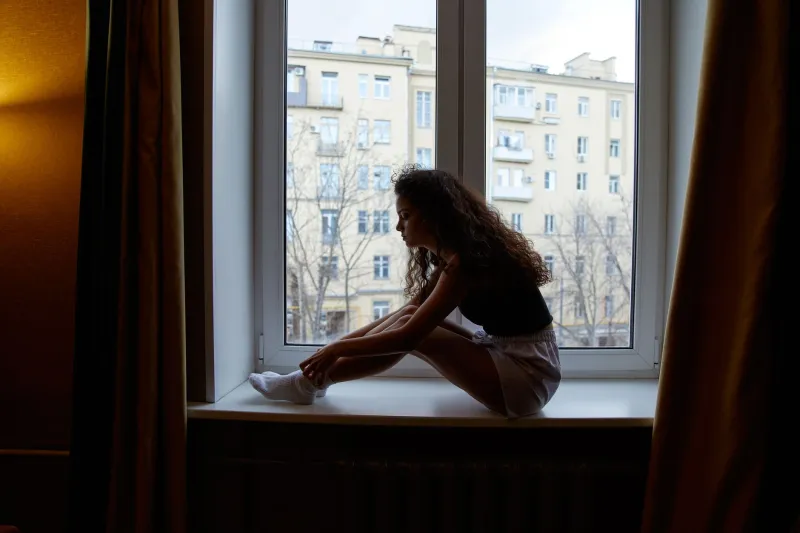
But I want to talk about something different. I want to talk about the version of boldness that doesn't trend. The kind that happens in your kitchen at 6am, in a therapist's office, in a quiet decision to walk away from something that no longer fits — with no caption, no comment section, and no one watching.
The Performance of Change
There's nothing wrong with celebrating publicly. Sharing wins, marking transitions, letting people in — these are human impulses, and they can be genuinely beautiful. But we've drifted somewhere strange when the sharing becomes the point, when the announcement precedes the action, when we're performing transformation before we've actually done the hard internal work.
You've seen it. The dramatic "I'm turning 30 and everything is different now" post that reads like a manifesto but doesn't actually change anything. The accountability posts that fizzle out in two weeks. The aesthetically pleasing "new chapter" content that's more about the image than the shift underneath it.
None of that is judgment — it's just an observation that modern life has confused documentation with transformation. And sometimes, the performance of change is actually a substitute for it.
The real stuff? The real stuff is quieter.
What Happens Off-Camera
Think about the most significant turning points in your own life. The moment you decided to stop drinking, before you told anyone. The morning you finally made the therapy appointment you'd been avoiding for two years. The conversation where you set a boundary with a family member and held it, even when it was uncomfortable, even when no one validated you for it.
Those moments rarely make it to social media. They're not photogenic. They're awkward and uncertain and sometimes they don't even feel like victories in the moment. But they're the ones that actually move the needle. They're the ones that, years later, you'll look back on as the real inflection points.
There is profound dignity in a change that only you know about. In a decision made not for approval, but because it was right. That's not hiding — that's integrity.
The Quiet Rebellion
Living on your own terms without broadcasting it is a radical act in 2025 America. We are surrounded by an ecosystem that monetizes personal narrative, that rewards vulnerability-as-content, that has made "authenticity" into its own kind of performance. Opting out of that — choosing to simply be different rather than announce being different — is genuinely countercultural.
It's also deeply freeing.
When you stop needing an audience for your evolution, something shifts. You start making decisions based on what you actually want rather than what will land well. You stop editing your choices for palatability. You start trusting your own read on your life without running it past the crowd first.
That's not isolation. That's self-possession. And it is, in my opinion, one of the most underrated forms of personal power.
Privacy Is Not the Same as Shame
Somewhere in the cultural conversation about openness and vulnerability, we conflated privacy with secrecy, and secrecy with shame. But they're not the same thing at all.
Choosing not to share something doesn't mean you're hiding it. It might mean it's sacred. It might mean you're still in the middle of it and it's not ready to be articulated. It might mean you simply don't owe anyone a front-row seat to your becoming.
Some things are worth protecting precisely because they're tender. A new creative project that needs room to breathe before it meets criticism. A healing process that doesn't need commentary. A relationship that's finding its footing without the weight of public expectation on it.
You are allowed to have a private life. Even — especially — in the age of oversharing.
Building a Life That Fits You, Not Your Feed
The most contented people I've encountered aren't necessarily the ones with the most curated online presence. They're often the ones who've gotten very clear about the gap between what looks good and what is good — and who've chosen the latter, even when it's less impressive from the outside.
They've quietly left careers that made no sense for them anymore. They've rebuilt relationships without turning them into content. They've changed their minds about big things — religion, politics, what they want their future to look like — and processed those shifts internally before (or without ever) sharing them publicly.
That takes courage. Real courage. The kind that doesn't come with applause.
A Note on Milestones That Don't Need a Moment
Not every milestone deserves a post. Not every shift needs to be marked. Some of the best things you'll do for yourself will go completely unwitnessed, and that's not a loss — that's just life lived from the inside out.
If you're in the middle of something right now that's hard and quiet and invisible to everyone around you, I want you to know: that counts. It counts more than the version of it you'd share. The fact that you're doing it without an audience, without external motivation, without the dopamine hit of public accountability — that's actually the purest form of it.
The boldest story you'll ever tell might be the one you never post.
And that's more than enough.