Done Fitting In: The Women Who Stopped Shrinking Themselves to Fit a Life That Was Never Theirs
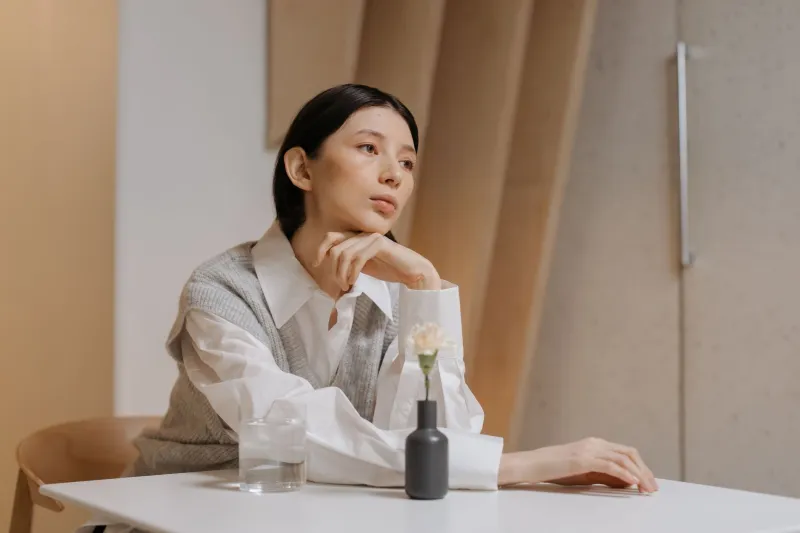
For most of her twenties, Renee did everything right. She checked every box on the list that had been quietly handed to her since childhood — good college, stable job, serious boyfriend, engagement ring by thirty. She bought the house. She adopted the dog. She stood in the middle of what was supposed to be her dream life and felt, in her words, "like a guest in someone else's story."
She's not alone. Not even a little bit.
Across the country, women are starting to name something that's been gnawing at them for years — that feeling of wearing a life that technically fits but somehow never quite feels right. Too tight in some places. Weirdly loose in others. Like a dress that looks perfect on the hanger but does something strange once it's actually on your body.
The shift happening right now isn't loud or flashy. It doesn't have a hashtag trending on X. But it's real, and it's gaining momentum, and it's worth paying attention to.
The Blueprint Nobody Asked You If You Wanted
Here's the thing about life blueprints — they get handed to you so early and so casually that most of us never even clock the moment we accepted them. It comes through your parents' expectations, your hometown's culture, the magazines you flipped through in waiting rooms, the movies where the girl always ends up with the house and the guy and the soft-lit kitchen.
The blueprint isn't always traditional, either. Sometimes it's the hustle-culture version — grind until you make it, sacrifice everything for the corner office, let ambition be your entire personality. Or it's the wellness-industrial-complex version — optimize every morning routine, chase a particular kind of glowing, curated peace. There are blueprints for rebels, too. Even the act of rejecting convention has its own prescribed aesthetic.
The common thread? None of them started with you sitting down and asking yourself what you actually want your daily life to feel like.
"I realized I'd been living reactively my entire adult life," says Dominique, a 34-year-old marketing director in Atlanta who walked away from a VP track to freelance and travel six months a year. "Every decision I made was a response to what I thought I was supposed to do next. I'd never once just... paused and designed anything from scratch."
What Customizing Actually Looks Like
When women start building lives around their values instead of inherited expectations, it rarely looks like a dramatic bonfire moment. It's usually quieter and stranger and more specific than that.
It looks like Priya, a 29-year-old in Chicago who decided to stay unmarried indefinitely — not because she's anti-love, but because she genuinely thrives in her solo setup and stopped pretending otherwise at family dinners.
It looks like Carla, 41, in Phoenix, who kept her mid-level nonprofit job even after her side business took off, because she actually likes having a reason to leave the house and talk to people every day, and hustle culture told her she was supposed to want more.
It looks like Simone, 36, who moved back to her small Georgia hometown after a decade in New York, and had to make peace with the fact that the life that fits her looks nothing like what her younger self would have respected.
None of these women are following a script. They're doing something harder — they're writing as they go.
How to Figure Out Where You're Living on Autopilot
The trickiest part of this whole thing is that borrowed scripts feel like your own preferences until you start examining them. So how do you actually tell the difference?
Start with resentment, not inspiration. Most self-help advice tells you to follow what lights you up. That's useful, but resentment is often faster and more honest. Where in your life do you feel a low-grade, chronic frustration that you can't quite explain? That friction is almost always a clue that something doesn't actually align with what you value.
Ask who benefits from your choices. Not in a paranoid way — just genuinely curious. When you look at the commitments filling your calendar, the goals you're chasing, the version of success you're building toward — who does that serve? Sometimes it's you. Sometimes it's an idea of you from ten years ago. Sometimes it's your mother's anxiety or your college roommate's approval.
Notice where you're performing versus living. There's a difference between doing something because it genuinely matters to you and doing something because of how it reads to an outside audience. The performing parts are usually exhausting in a specific way — the kind of tired that doesn't go away after sleep.
Try the subtraction experiment. Instead of asking what you want to add to your life, ask what you'd quietly be relieved to remove. The answers to that question are almost always more honest than the answers to any goal-setting exercise.
The Social Tax Is Real — And It's Worth Knowing About Upfront
Let's not romanticize this. Women who deviate from expected blueprints pay a social tax, and it's worth being clear-eyed about that before you blow anything up.
You will confuse people. Some of them will take your choices as a commentary on theirs, even when you mean nothing of the sort. You'll get questions that are really just thinly veiled concern, or judgment dressed up as curiosity. "But don't you want..." is a sentence you'll hear a lot.
The women who navigate this best aren't the ones who don't care what anyone thinks — that's not actually possible for most humans, and pretending otherwise is its own kind of performance. They're the ones who've gotten clear enough on why they're making their choices that other people's confusion doesn't destabilize them.
Clarity is armor. Not certainty — you don't have to be certain. But clarity about your values, your actual priorities, the texture of the daily life you're trying to build? That's what holds when things get wobbly.
The Life That Actually Fits
Renee, from the beginning of this story, eventually did something that scared her. She sat down alone — no partner, no best friend on FaceTime, no journaling prompts from the internet — and made a list of every major life choice she'd made in the past decade. Next to each one, she wrote a single honest answer to the question: whose idea was this, really?
Some of the answers surprised her. Some didn't.
She didn't burn her life down. She still has the dog. But she renegotiated some things, let some other things go quietly, and started making decisions from a different starting point — her own actual preferences instead of a blueprint she'd inherited without ever consenting to it.
"It's not a big dramatic story," she says. "It just finally feels like mine."
That might be the most radical thing a woman can say right now.
Not that she reinvented everything. Not that she rejected every convention. Just that she looked at her life and recognized herself in it.
That's the quiet rebellion. And it's worth every bit of the work it takes to get there.